Articles.
Notes from the work: product thinking, engineering quality, and what AI tools do well and what they leave to you.
- articles
- 59
- series
- 3
- topics
- 5
All articles
Page 5 of 7
Metrics and code health
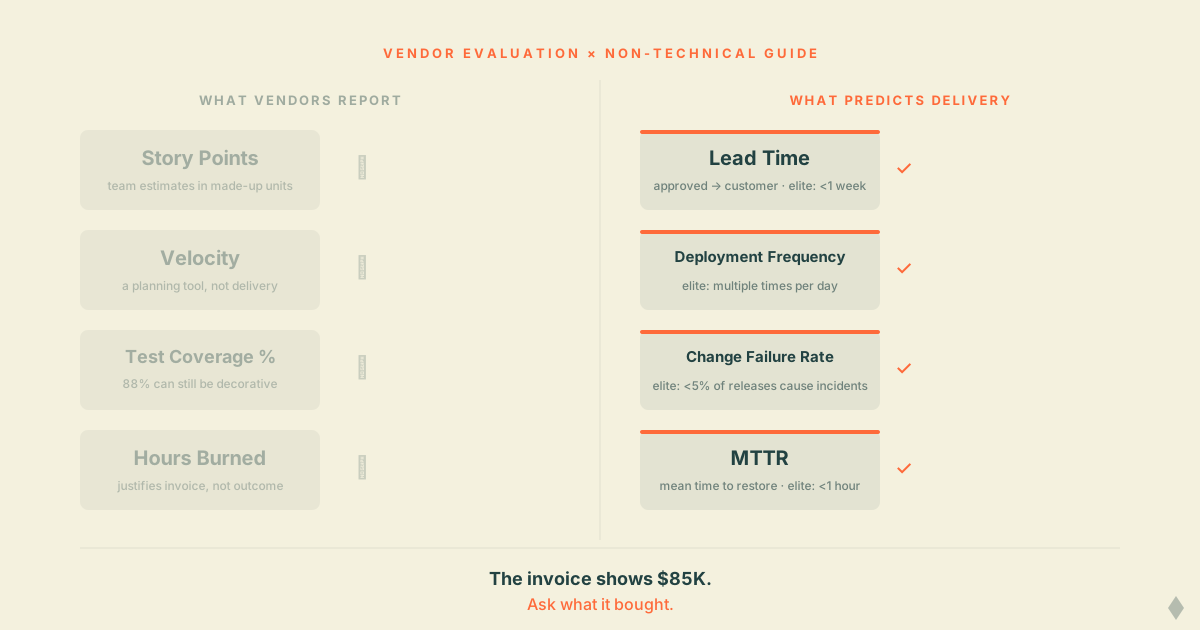
What Are You Actually Paying For? A Non-Technical Guide to Evaluating Your Engineering Vendor
Most founders evaluate engineering vendors on story points and velocity. Neither metric predicts whether software reaches customers. Here are the four questions — no technical background required — that reveal everything.
Shivani Sutreja8 min read
Engineering practices
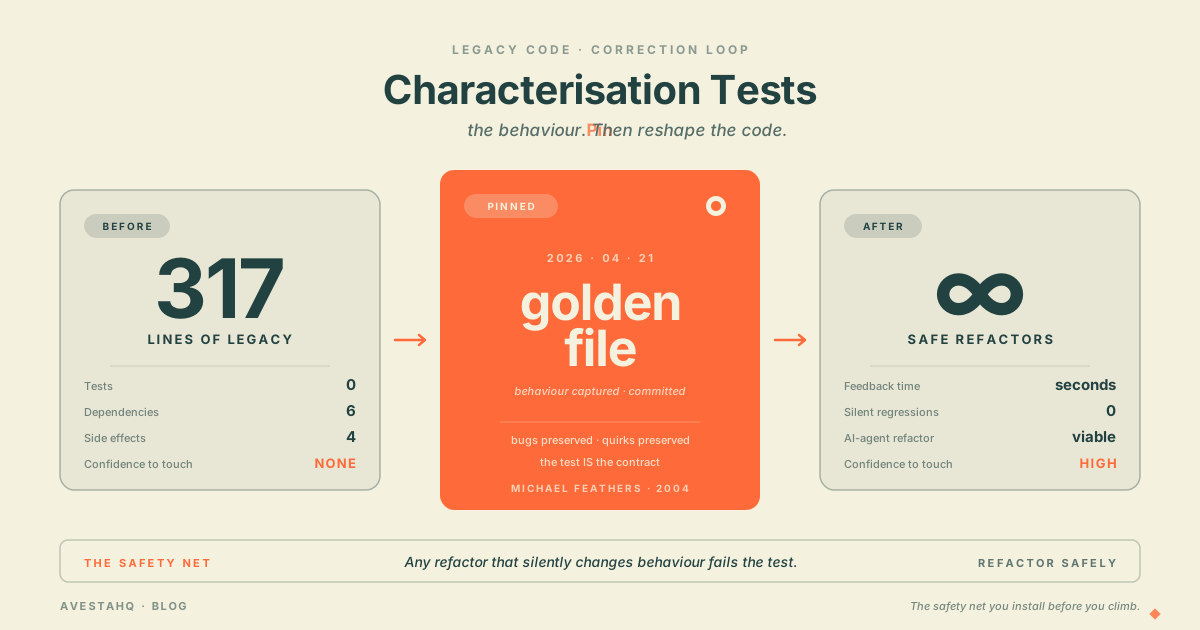
Characterisation Tests: The Safety Net You Need Before Touching Legacy Code
Every team with a legacy codebase hits the same wall: you cannot add tests without refactoring, and you cannot refactor without tests. Characterisation tests are the specific tool — invented by Michael Feathers, amplified by AI — that breaks the loop.
Harsh Parmar9 min read
Product discovery
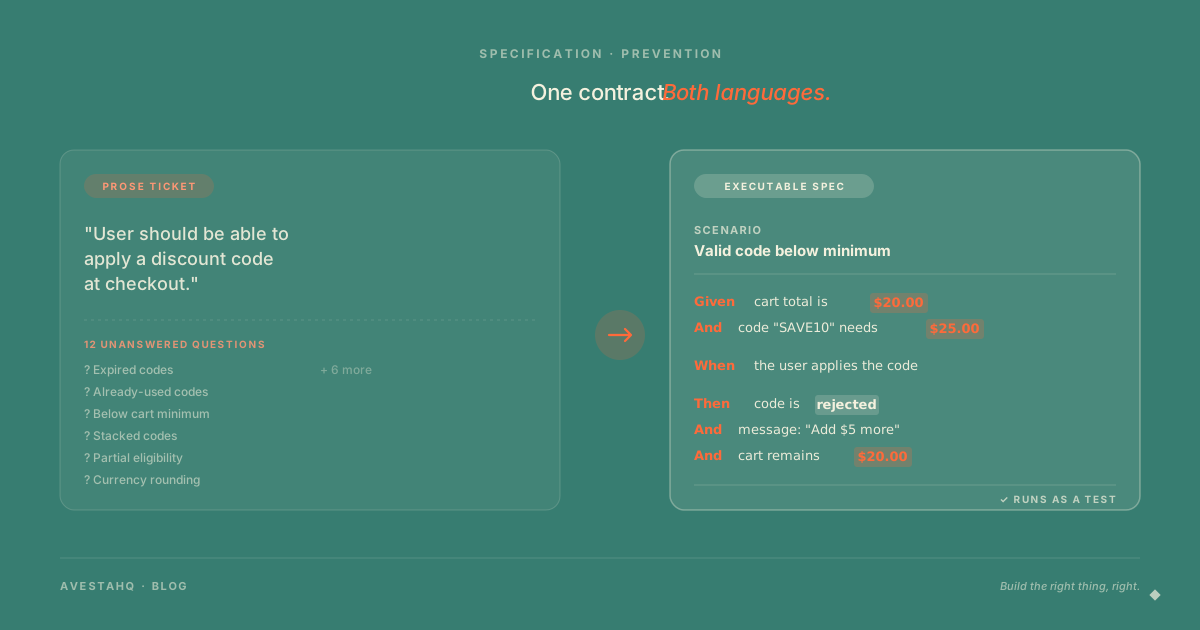
Specification-Driven Development: How PMs and Engineers Finally Speak the Same Language
Your PM writes prose. Your engineer translates it to code. QA finds the gaps. Your AI agent just compressed this broken loop from weeks into hours — without fixing any of the misalignment. Specification-driven development is the contract layer both sides can read, write, and execute. And it's the practice that separates teams who get leverage from AI agents from teams who ship the wrong thing, faster.
Chirag11 min read
Product discovery
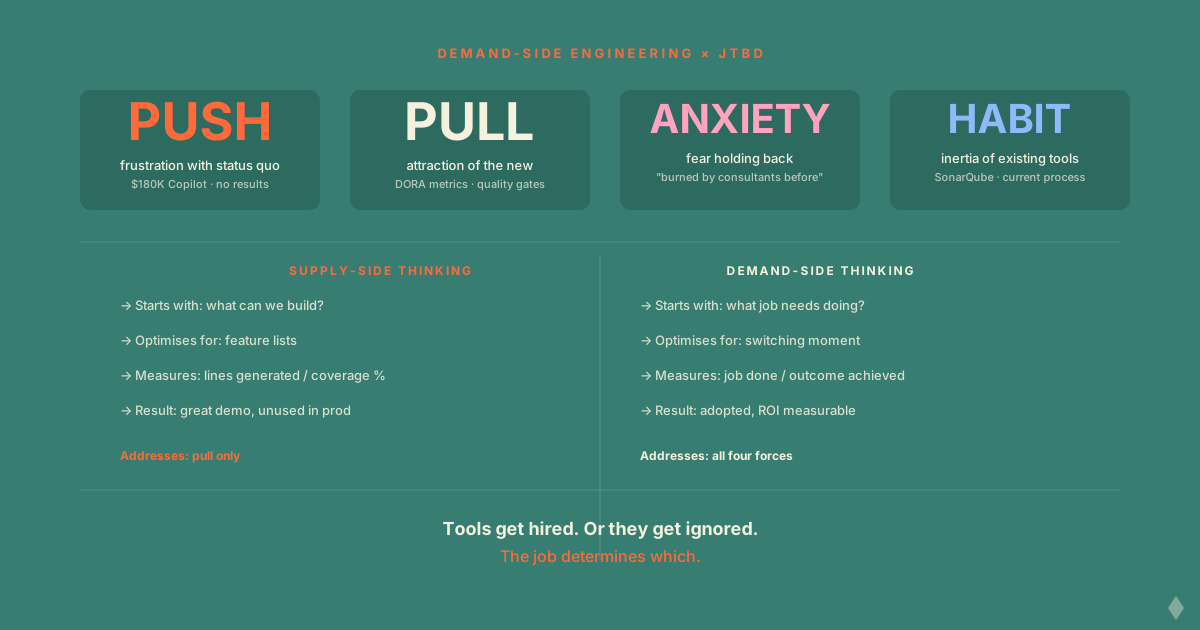
Demand-Side Engineering: Applying JTBD to Developer Tools
Most developer tools fail adoption not because they're poorly built, but because they're designed from the wrong starting point. Here's how Jobs-to-be-Done thinking explains why engineering tools succeed or sit unused — and what it reveals about AI adoption.
Shivani Sutreja11 min read
AI engineering
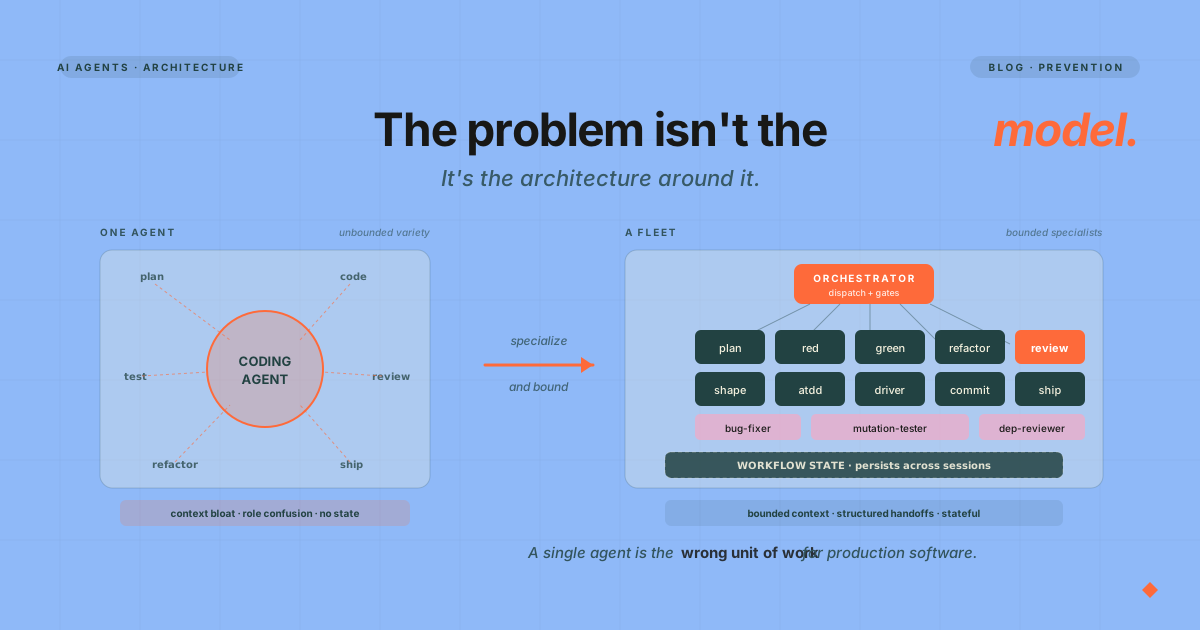
The Problem Isn't the Model. It's the Architecture Around It.
Every new model release prompts the same question — is this the one that finally makes AI coding agents reliable? It's the wrong question. What keeps single-agent workflows from scaling to production is architectural, not about the model. Here's the pattern the teams shipping real code keep converging on.
Harsh Parmar9 min read
Product discovery
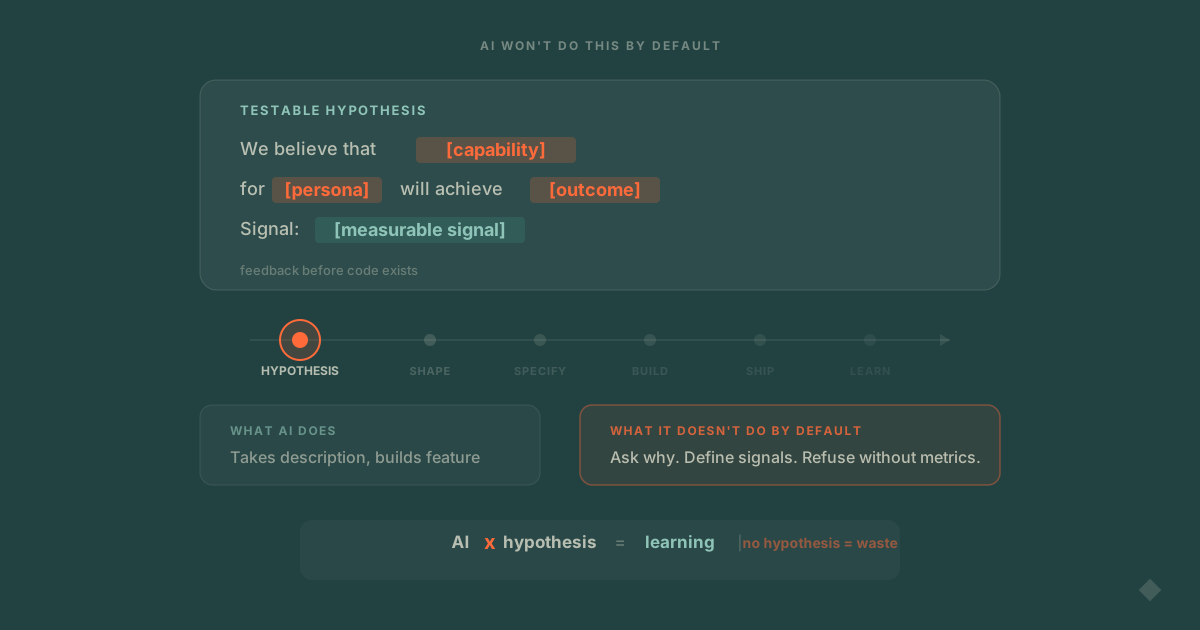
AI Won't Do This by Default: Hypothesis-Driven Development
AI coding agents are the most powerful tools engineering has ever had. But the teams getting unreal results aren't just prompting — they're combining AI with practices that unlock outcomes nobody else can explain. Hypothesis-driven development is the first unlock.
Chirag6 min read
Product discovery
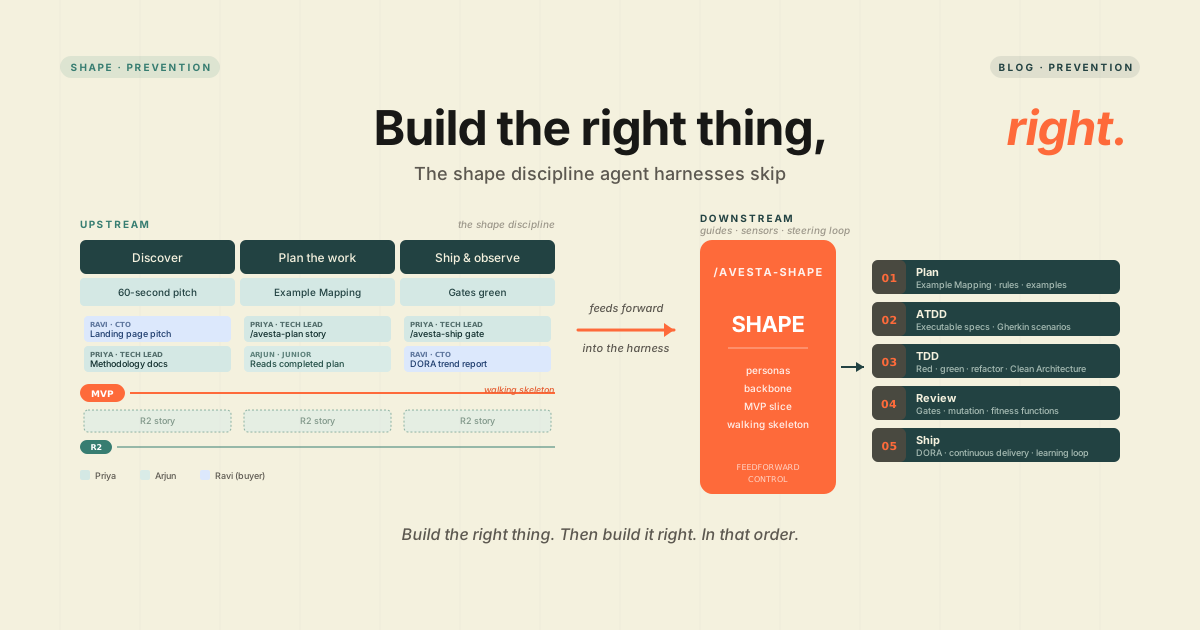
Build the Right Thing, Right: The Shape Discipline
Harness engineering gives coding agents guides and sensors to make output reliable — the downstream controls that ensure things are built right. Shape is the upstream control that ensures the right thing is being built. Here's what the shape discipline looks like — and why AI teams that skip it ship well-built fragments of the wrong product.
Chirag17 min read
AI engineering
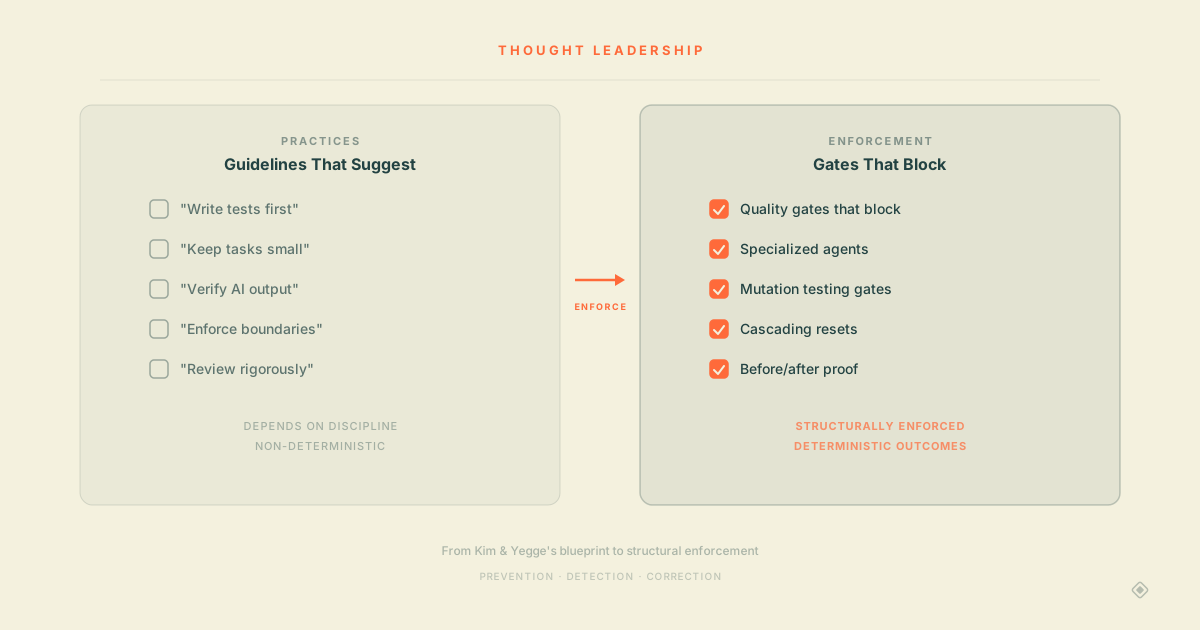
Vibe Coding for Production-Grade Systems: What Gene Kim and Steve Yegge Got Right
Gene Kim and Steve Yegge argue that vibe coding works for production — if you have preventive, detective, and corrective controls. We agree. We built the platform that enforces those controls structurally. Here's what we've learned about why practices alone aren't enough.
Chirag14 min read
How we build
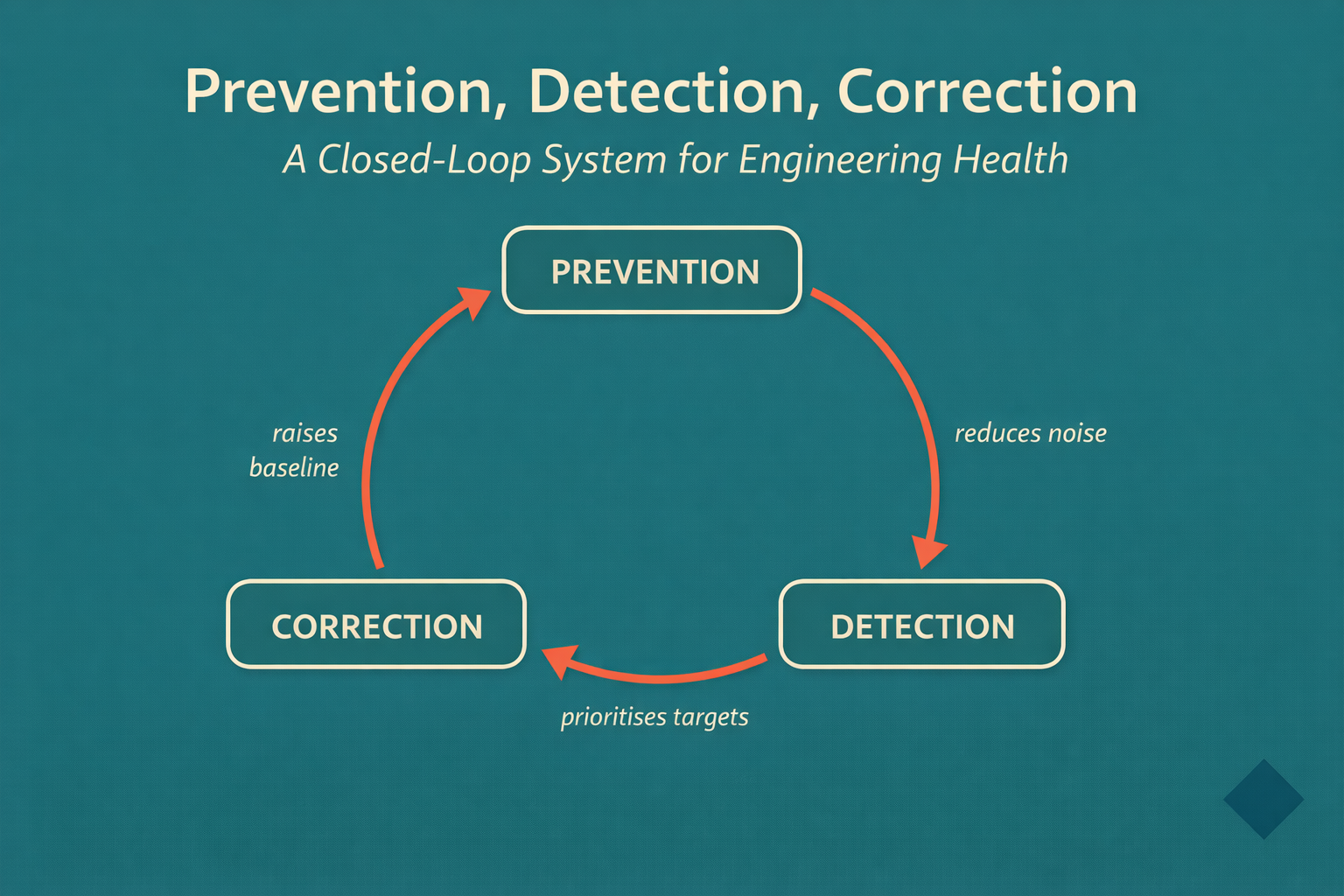
Prevention, Detection, Correction: A Closed-Loop System for Engineering Health
Most teams treat engineering quality reactively — ship fast, catch problems in production, fix when it hurts. That cycle keeps you busy without making you better. Prevention, Detection, and Correction form a closed loop where each phase reduces the work the next must do.
Vishvjitsinh Vanar12 min read
Working through one of these problems?